Blog

Your blog category

Blog

ABA Therapy Insurance Coverage in Michigan: What Families Need to Know

Most families learn about ABA therapy first. Then they ask the question that stops everything: can we actually afford this? ABA therapy insurance coverage in Michigan is broader than most families realize, and the barriers that feel insurmountable are often navigable with the right information. This is that information. Why Insurance Coverage for ABA Exists at All The Federal Mandate That Changed Everything Before 2014, ABA therapy was treated by most insurers as an experimental or educational service rather than a medical one. That classification kept it out of coverage for the majority of families who needed it. The Affordable Care Act changed the landscape fundamentally. By classifying autism spectrum disorder as a covered essential health benefit, the ACA created a pathway for ABA therapy insurance coverage across all states through plans sold on the marketplace. Michigan followed with its own parity law requiring state-regulated plans to cover autism therapy insurance without arbitrary caps. What Parity Laws Actually Require Mental health parity legislation requires that insurance plans cover behavioral health treatment on the same terms as physical health treatment. In practice, this means that ABA therapy for autism cannot be subject to visit limits, prior authorization hurdles, or cost-sharing arrangements that would not be applied to an equivalent medical service. That legal protection exists for families in Michigan, and understanding it changes how you navigate the authorization process. Michigan Medicaid ABA: What Families With Medicaid Need to Know EPSDT and Why It Matters Michigan Medicaid covers ABA therapy for children through the Early and Periodic Screening, Diagnostic, and Treatment benefit, known as EPSDT. EPSDT requires Medicaid to cover any service that is medically necessary for a child under 21, regardless of whether that specific service is listed in Michigan’s general Medicaid plan. This is a federal requirement, not a discretionary benefit. Michigan Medicaid ABA coverage for children is legally mandated when there is medical necessity documentation. How to Establish Medical Necessity for Michigan Medicaid ABA Medical necessity for ABA therapy is established through a formal autism diagnosis from a licensed psychologist or developmental pediatrician, combined with a functional behavioral assessment that demonstrates the child’s need for behavioral intervention. Michigan Medicaid ABA requires this documentation to be submitted during the prior authorization process. The authorization covers a specific number of hours over a defined period, after which a progress review determines whether continued services are medically necessary. Private Insurance and ABA Therapy Coverage in Michigan What Your Plan Is Actually Required to Cover Michigan’s autism insurance law, Public Act 141 of 2012, requires most private insurance plans in Michigan to cover ABA therapy costs as part of behavioral health treatment. Fully insured plans regulated by the state must cover ABA services with no lifetime dollar limits and no age caps above what applies to other medical conditions. This covers the majority of employer-sponsored plans and individual marketplace plans. It does not cover self-funded employer plans, which are regulated federally and not by state law. The Prior Authorization Process Explained Prior authorization for ABA therapy insurance coverage requires a formal diagnosis, a treatment plan developed by a BCBA, and documentation supporting medical necessity. The insurer then approves a specific number of therapy hours over a defined period. Most families encounter their first frustration here. Insurers sometimes request additional documentation, require peer reviews, or issue initial denials that are intended to be appealed. Understanding that the first authorization request is often not the final answer prevents families from accepting a denial as a closed door. How Much Does ABA Therapy Cost Without Insurance? The Real Numbers for Michigan Families ABA therapy cost without insurance coverage ranges widely based on intensity and provider credentials. A BCBA assessment typically runs between $300 and $600 depending on the provider. Direct therapy hours with an RBT under BCBA supervision cost between $40 and $80 per hour in most Michigan markets. Comprehensive programs providing 20 to 40 hours per week of early intensive behavioral intervention carry monthly costs that can exceed $3,000 to $6,000 without insurance support. These numbers explain why ABA therapy covered by insurance is not a convenience. It is the difference between accessing evidence-based treatment and not accessing it. What Families Pay Out of Pocket Even With Insurance Even with insurance, most families encounter some autism therapy insurance cost sharing. Copays, deductibles, and coinsurance apply to ABA services the same way they apply to other covered medical services. Understanding your plan’s out-of-pocket maximum is important because ABA therapy is a high-volume service. Families who exhaust their deductible early in the year often see their cost burden drop significantly for the remainder of the benefit year. What to Do When Coverage Is Denied Appeals Are More Often Successful Than Families Realize An initial denial of ABA therapy insurance coverage is not a final decision. Every insurance plan is required to provide an appeals process, and appeals for ABA services in Michigan succeed at meaningful rates when they are supported by proper clinical documentation. A written appeal should include the child’s formal autism diagnosis, the BCBA’s treatment plan, specific documentation linking the requested services to the child’s medical needs, and peer-reviewed research supporting the medical necessity of ABA therapy for autism. Many BCBAs assist families with this documentation as a standard part of their practice. External Review Is an Option If an internal appeal is denied, families with private insurance in Michigan have the right to request an external review by an independent organization. External reviewers are not affiliated with the insurer and make decisions based solely on medical necessity criteria. External reviews have overturned ABA therapy denials in Michigan, and the option exists specifically to provide families with recourse beyond the insurer’s own internal process. Navigating the System Without Getting Lost in It What the First Phone Call Should Cover Before authorizing any ABA services, call the member services number on your insurance card and ask four specific questions. Does my plan cover ABA therapy for autism? Is prior authorization required? What documentation is needed?

Blog

Assent-Based ABA Therapy: Why Your Child’s Voice Matters Most

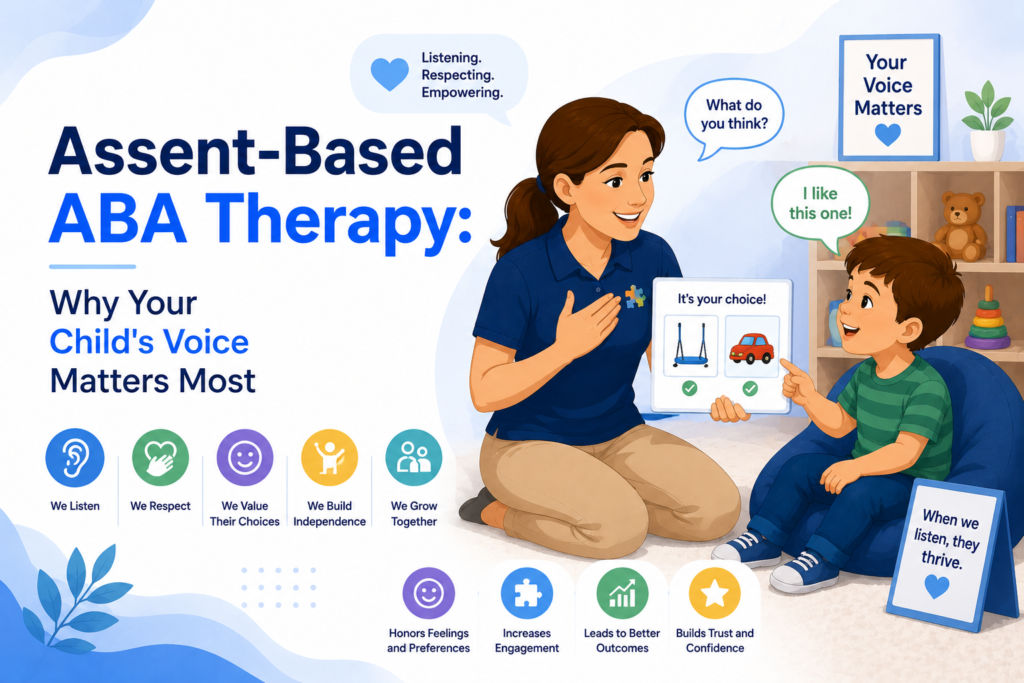
Here is a question most intake paperwork never asks: does your child actually want to be in this room, doing this thing, with this person? Assent-based ABA therapy is built on the premise that the answer to that question matters clinically, ethically, and practically. It is not a soft philosophy layered onto behavioral science. It is a fundamental shift in how therapy is designed, delivered, and evaluated. And for families who have watched their child shut down inside a clinical setting, it is an explanation worth understanding fully. The Problem With Compliance-Focused Therapy When Cooperation Looks Like Progress but Isn’t For decades, a certain version of ABA therapy measured success by compliance.  Could the child sit?  Could they follow the instructions?  Did they complete the task? Compliance is easy to measure and dangerously easy to mistake for genuine learning. A child who complies with a request because the consequence of not complying is aversive has learned something very specific: that refusing is not safe. That is a trauma response, not a therapeutic gain. Assent in ABA recognizes this distinction and treats it as clinically significant. What Happens When Discomfort Is Ignored Children who experience repeated sessions that override their clear signals of distress do not simply become less distressed over time. Research published in the journal Behavior Analysis in Practice has examined the relationship between coercive therapy practices and long-term emotional outcomes in autistic individuals. The findings are consistent with what trauma-informed practitioners have long observed. Forced participation does not produce the generalized, motivated learning that ethical ABA therapy is designed to achieve. It produces a child who has learned to suppress their own signals. That outcome is the opposite of what treatment should do. What Assent-Based ABA Therapy Actually Means Assent Is Not the Same as Consent Legal consent for a child’s therapy belongs to the parent or guardian. That is not what assent addresses. Assent in ABA refers to the ongoing behavioral signals a child gives that indicate whether they are willing, engaged, and regulated enough to participate meaningfully in a session. These signals do not require verbal language. They require a therapist trained to read them. A child who turns away, goes limp, begins engaging in repetitive self-soothing behavior, or simply stops responding is communicating clearly. Assent-based ABA therapy requires therapists to read that communication and respond to it by adjusting, pausing, or changing the approach. What Assent Looks Like in a Real Session In a session guided by ethical ABA therapy principles, the therapist is continuously monitoring the child’s affective state alongside their behavioral responses. Is this child engaged? Are they moving toward the activity or away from it? Does the pace of instruction match their current regulatory state? Child-centered ABA therapy uses these questions as real-time clinical data, not as obstacles to getting through the session plan. When a child signals that they are at their limit, a skilled therapist honors that signal and uses it to design a better pathway forward. That responsiveness is not permissiveness. It is precision. The Neuroscience Behind Why Assent Matters Stress and the Capacity to Learn The brain’s stress response system and its learning system share real estate in ways that matter enormously for therapy. When a child is in a state of significant distress, the prefrontal cortex, the part of the brain responsible for executive function, language, and learning, becomes less accessible. The limbic system, which manages threat response, takes priority. A child in that state is not in an optimal state to acquire new skills. Ethical ABA therapy that attends to the child’s internal state is not less rigorous. It is being more neurologically informed. Why Positive Behavior Support and Assent Work Together Positive behavior support is a framework that emerged from ABA and shares many of its core principles. It emphasizes preventing challenging behaviors through environmental design rather than responding to them after the fact. When assent-based ABA therapy and positive behavior support are integrated, the result is a therapeutic environment that works with the child’s nervous system rather than against it. Challenges become less frequent because the environment and the pace are calibrated to what the child can actually handle. What Child-Centered ABA Therapy Looks Like in Practice Following the Child’s Lead Child-centered ABA therapy begins every session by reading what the child brings to the room. Their energy, their regulatory state, their current interest, their tolerance for demand. The session is then shaped around what that child can engage with meaningfully right now, not around what the session plan says should happen today. This does not mean abandoning goals. It means pursuing goals through pathways that the child is actually willing to walk down. A therapist who can find ten different routes to the same skill target is a better therapist than one who can only reach it one way. Assent-based ABA therapy demands that level of clinical creativity. What Happens When a Child Says No In assent-based practice, a child’s clear refusal is not an obstacle to be overcome. It is information. The therapist’s job is to understand what the refusal communicates. Is the child overstimulated? Was the previous demand too high? Is there a sensory issue in the environment? Does the child need a different kind of reinforcement? Each of these has a different solution, and ethical ABA therapy requires identifying the right one rather than defaulting to compliance strategies. How Assent in ABA Builds Better Long-Term Outcomes Trust Is a Therapeutic Variable When children experience therapy as something that happens with them rather than to them, something changes in the therapeutic relationship. They begin to anticipate sessions with less anxiety. They initiate interaction with therapists more readily. Their engagement becomes genuine rather than performed. Assent in ABA is not just an ethical requirement. It is a clinical accelerant. What the Research Actually Shows Studies examining the outcomes of child-centered ABA therapy approaches consistently show that intrinsically motivated learning produces stronger skill acquisition and more robust generalization than compliance-based approaches. The

Blog

In-Home ABA Therapy: Benefits of Naturalistic Teaching at Home

There is a psychological phenomenon researchers call context-dependent learning. The brain encodes what it learns alongside the sensory environment where learning happened. In-home ABA therapy exists because of this phenomenon. Not as a convenience. As a clinical advantage that no clinic setting can replicate. And for families watching their child fall apart the moment the school day ends, that advantage is worth understanding deeply. The Context Problem That Clinic-Based Therapy Cannot Solve Why Skills Learned at a Table Stay at the Table A child who learns to request a snack at a therapy table, in a room designed to minimize distraction, using materials chosen by a clinician, has learned something genuinely useful. But they have learned it attached to that specific context. The sensory cues of the clinic. The specific therapist. The particular chair. The brain stores all of it as part of the memory. Home-based ABA therapy disrupts this limitation by placing learning exactly where the skill will actually be used. What Generalization Really Requires Generalization, meaning the ability to use a skill across different people, settings, and materials, is one of the most demanding developmental tasks for children on the autism spectrum. Research from the Journal of Applied Behavior Analysis consistently shows that naturalistic teaching approaches produce stronger generalization outcomes than structured discrete trial training alone. The reason is straightforward. When a skill is practiced in the kitchen during actual breakfast, it stays in the kitchen during actual breakfast. ABA therapy at home removes the transfer problem at the source. There is no gap between where the skill was learned and where it needs to function. What In-Home Autism Therapy Actually Looks Like A Morning Routine Becomes a Curriculum A skilled in-home ABA therapist does not arrive with a binder of worksheets and sit down at a separate table. They walk into the morning routine and see a learning environment. The transition from pajamas to school clothes. The resistance at the bathroom door. The eight seconds of eye contact that happened over breakfast and can be extended to ten. Every ordinary moment carries therapeutic potential. In-home autism therapy is built around these moments. Not around interrupting them. The Sensory Reality of Home Home carries a sensory signature that no clinic can replicate. The specific smell of the house. The familiar texture of the couch. The sound of a sibling’s voice from the next room. For children with autism, these sensory anchors are not distractions. They are stabilizers. In-home ABA therapy uses this stabilizing familiarity as a foundation for introducing challenge and building tolerance. A child who is regulated by their environment is a child who can learn. That is the clinical logic behind every home-based ABA therapy program designed by qualified behavior analysts. What NET ABA Therapy Is and Why It Changes Everything Naturalistic Environment Teaching Explained NET ABA therapy, which stands for Naturalistic Environment Teaching, is the specific methodology that in-home ABA therapy draws on most heavily. It differs from structured discrete trial training in one fundamental way: the learning opportunity is not created by the therapist. It is found in what the child is already doing and motivated by. The therapist follows the child’s lead and embeds instruction within activities the child has already chosen. A child who wanders to the bookshelf is being offered a communication opportunity, a turn-taking opportunity, and a joint attention opportunity simultaneously. NET ABA therapy trains therapists to see and use all three without interrupting the child’s natural engagement. Why Child-Led Learning Produces Faster Results Children learn fastest when they are intrinsically motivated. This is not controversial developmental psychology. It is observable in every classroom, every playground, and every well-designed ABA therapy at-home session. NET ABA therapy capitalizes on natural motivation by pairing instruction with activities the child already loves. That alignment between teaching and wanting produces faster skill acquisition, stronger retention, and more genuine generalization than any amount of structured table work alone. The Problems Home-Based ABA Therapy Solves That Clinics Cannot Behavior That Only Happens at Home Some behaviors are environmentally specific. The child who melts down during the morning routine at home but holds it together at school is not inconsistent. They are responding to different environmental conditions with different behavioral patterns. A clinic-based therapist will never see that meltdown. They will never identify the antecedent that precedes it, the consequence pattern that maintains it, or the environmental modifications that might prevent it. Home-based ABA therapy puts the therapist in the room where the behavior actually happens. That changes everything about the quality of the assessment and the precision of the intervention. Transition Problems Require Transition Practice Transitions are among the most common and most distressing behavioral challenges in autism. Moving from a preferred activity to a non-preferred one. Getting from the car to the classroom. Shifting from free play to structured time. ABA therapy at home allows therapists to practice transitions in the actual transition environments. Not role-played transitions in a therapy room. The actual hallway. The actual car door. The actual moment when the TV needs to go off. That specificity is what makes the progress stick. Parent Involvement: The Factor That Multiplies Everything The 165-Hour Gap Nobody Talks About A therapist providing in-home autism therapy might work with your child for three to five hours per week. There are 168 hours in a week. The quality of the remaining 165 hours determines whether therapy gains accumulate or erode. That is not a criticism of parents. It is the single most important variable in the entire treatment equation. In-home ABA therapy addresses this gap directly through parent coaching embedded in every program. Parents learn to recognize the same moments the therapist sees. They learn when to prompt, when to wait, and how to respond in ways that support the behavioral plan rather than inadvertently working against it. What Parent Coaching Actually Teaches Parent coaching in ABA therapy at home is not about turning families into clinicians. It is about teaching parents to read the behavioral

Blog

What Is ABA Therapy? A Parent’s Guide to Applied Behavior Analysis

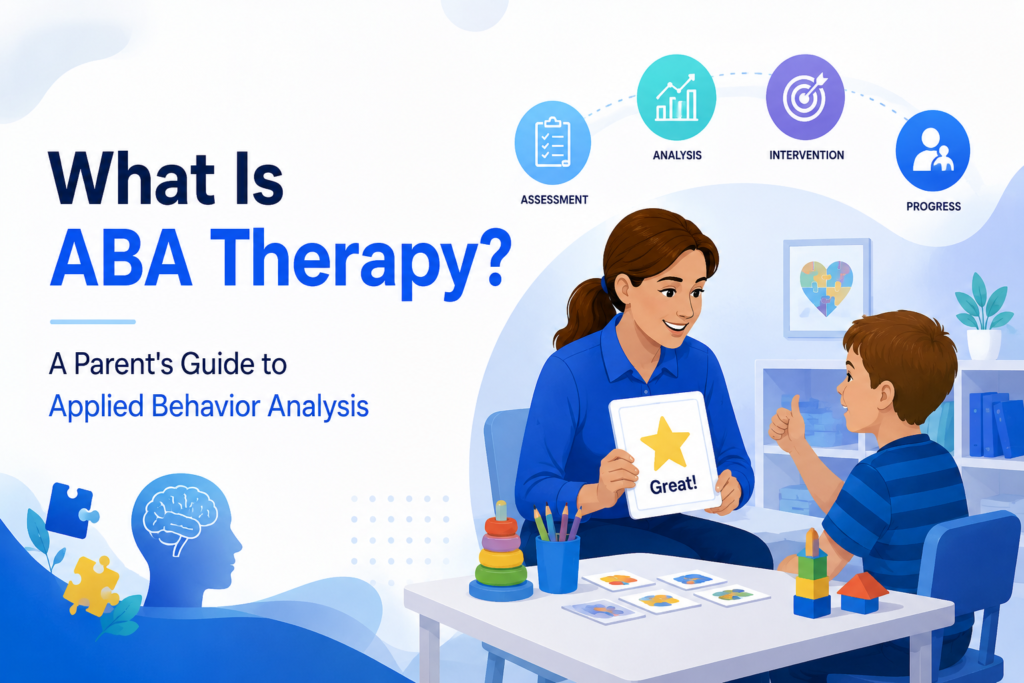
Your child screams every time you turn off the TV.  Not a tantrum.  Not defiance.  A human nervous system communicates the only way it currently knows how. What is ABA therapy?  At its core, it is the science of understanding exactly why that scream happens, what need it is trying to meet, and how to teach a better way to meet that same need. Applied behavior analysis has been reshaping how we understand autism, learning, and behavior for over five decades. And most parents have never heard the full story. The Science That Actually Explains Your Child’s Behavior Why Behavior Is Never Random Here is a fact that changes everything once it lands: every behavior serves a function. Not sometimes. Every time. The child who bites, the one who shuts down, the one who lines up toys for forty minutes instead of making eye contact. All of them are communicating something real and specific about their internal experience. Applied behavior analysis is built on this principle. It traces behavior back to its environmental causes rather than treating it as a character flaw or a symptom to be suppressed. That shift in perspective is not just philosophical. It is clinically powerful. B.F. Skinner and the Foundation of ABA The scientific roots of ABA therapy stretch back to B.F. Skinner’s work on operant conditioning in the mid-twentieth century. Skinner demonstrated that behavior is shaped by its consequences. Behaviors that produce positive outcomes are repeated. Behaviors that produce negative or neutral outcomes fade. This is not controversial neuroscience. It is the basic operating logic of the human brain. ABA therapy for autism applies that logic with precision. Therapists study what happens before a behavior occurs, what the behavior looks like, and what follows it. That three-part structure reveals why behaviors exist and exactly how to change them. How Does ABA Therapy Work: The ABC Framework Antecedents, Behaviors, Consequences How does ABA therapy work in practice? It starts with the ABC model, and it is simpler than it sounds. An antecedent is whatever happens immediately before a behavior. It could be a request, a sensory input, a transition, or a change in routine. The behavior is the observable response. The consequence is what immediately follows that response. Understanding this sequence reveals patterns that would otherwise look like chaos. A child who throws a toy every time a sibling enters the room is giving a therapist an antecedent. The consequence, which is what the parent does next, determines whether that behavior strengthens or fades. The Truth About Reinforcement Most people hear the word reinforcement and think of bribes. That misunderstanding is worth correcting directly. Reinforcement in ABA therapy is not about rewarding compliance. It is about identifying what genuinely motivates a specific child and using that motivation to teach new skills. For one child that might be a specific toy. For another, it is a particular song, a verbal phrase they love, or a physical activity. When reinforcement is chosen correctly, it aligns with the child’s own internal drive. That alignment is what makes ABA therapy, explained properly, look nothing like what critics imagine. The Problem With How ABA Gets Talked About The Version That Hurt People There is a version of ABA therapy from the 1960s and 1970s that used punishment, long hours of repetitive drills, and paid little attention to what the child was experiencing during the session. That version caused harm. It is also not what ethical applied behavior analysis looks like today, and conflating the two creates real barriers for families who need support. The distinction matters enormously. What Ethical ABA Therapy For Autism Looks Like Now Modern ABA therapy for autism is naturalistic, assent-based, and deeply individualized. Therapists follow the child’s interests. Sessions look like play because play is how children learn. Goals are set around what matters most to the family and the child. Progress is tracked with genuine attention to the child’s quality of life, not just the elimination of behaviors that make adults uncomfortable. The Behavior Architects build every program around these principles, because the science and the ethics point in the same direction. ABA Therapy Explained: What Parents Actually Observe The First Two Weeks Are Mostly Watching A new ABA therapist in your home will spend the first sessions observing more than intervening. They are mapping your child’s behavioral landscape from inside the real environment. What triggers a shutdown? What sparks genuine engagement? Where are the communication gaps that create the most daily friction? This observation phase looks passive. It is actually the most critical part. When Progress Starts to Appear By week six or eight, specific changes tend to emerge. Not dramatic leaps. Precise, meaningful shifts. A child who used to melt down every time a preferred activity ended might now tolerate a three-minute visual countdown. A child who could not request a snack independently now uses a picture card, a gesture, or a word. These are not small wins dressed up as big ones. They are the early architecture of independence. Tracking these shifts requires consistent data collection, which is a defining feature of how ABA therapy works in practice. Every session is documented. Every skill is measured against a baseline. Progress is visible, and so are the areas that need more attention. Who Actually Delivers ABA Therapy BCBAs and Registered Behavior Technicians Board Certified Behavior Analysts, known as BCBAs, design and supervise every ABA program. They hold graduate-level training in behavior science and complete extensive supervised fieldwork before certification. Registered Behavior Technicians, or RBTs, implement the sessions under direct BCBA supervision. They are trained specifically in the techniques the supervising BCBA has designed for each individual child. At The Behavior Architects, every program is designed by a BCBA and delivered by trained, closely supervised clinicians. The quality of that supervisory relationship is not an administrative detail. It is what determines whether the therapy actually works. What ABA Therapy Builds That Families Actually Need Skills for Real Life, Not Just the Session ABA

Blog

What Is Naturalistic Environment Teaching? How The Behavior Architects Use NET

Why the most effective learning often looks nothing like a therapy session Everyday situations play a bigger role in child development than most people realize. Simple actions, like reaching for an item in a grocery store or reacting to a new environment, can reflect how a child processes sensory input, communicates needs, and manages change.  Applied Behavior Analysis Detroit providers increasingly focus on these real-life moments, using them to build practical skills that carry over beyond structured sessions.  Naturalistic ABA Therapy: When the Setting Is the Teacher Naturalistic ABA therapy does not begin at a table. It does not begin when a therapist opens a bag and arranges materials. It begins the moment a child enters a space that contains the ordinary textures of their life: the noise, the motion, the expected and unexpected demands of being in the world. Back to the Grocery Store In the story above, a skilled therapist accompanying that family does not redirect the child away from the cereal box. They move toward it. They pause beside the child, wait, and use that moment of genuine engagement to create a communicative opportunity. “Shake,” the therapist says, not as a command, but as a label, timed to the exact moment the child performs the action. The child looks up. Not because they were asked to. Because the word arrived precisely when the experience did, and the match registered. That is naturalistic ABA therapy in its simplest form. The teaching moment is borrowed from real life rather than constructed in isolation. What Just Happened: The Behavioral Science Underneath Pausing the story for a moment reveals the mechanism. Naturalistic environment teaching (NET) works by identifying naturally occurring reinforcers, the things a child already finds interesting or enjoyable, and using them as the context for learning.  Instead of a therapist presenting a flashcard of a cereal box and asking “what is this?”, the real box, the real action, the real sensory experience does the teaching. This approach draws on principles from incidental teaching, pivotal response training, and the broader framework of naturalistic developmental behavioral interventions. The underlying logic is that motivation drives attention, and attention is the prerequisite for learning. Finding what a child is already motivated by and teaching within that context reduces the effort required to create engagement. Autism Therapy Detroit: Where This Approach Lives Autism therapy Detroit families are looking for does not happen only in dedicated clinic rooms. Naturalistic environment teaching is particularly well-suited to the home, community, and school environments where children spend the majority of their time. The grocery store, the playground, the kitchen table, the back seat of the car: these are all viable teaching environments for a skilled practitioner. The Story Continues Back in the grocery store aisle, the child has now been handed the cereal box. The therapist waits. The child shakes it again and then looks at the therapist. This is called a communicative look, a bid for shared attention. The therapist responds: “You like that sound.” The child reaches for another box on the shelf. Nothing about this looks like therapy in the conventional sense. There is no table, no chair, no reinforcement chart visible. But the therapist is tracking the child’s initiations, identifying what captures sustained attention, and building a picture of what will drive engagement in future teaching moments. The session has structure. It is just structure that moves with the child. Why Some Children Respond Better to NET Children who struggle with transfer, the ability to take a skill learned in one setting and apply it in another, often show better outcomes when skills are taught in the environments where they will ultimately be used. Children who find structured clinic settings dysregulating may access learning more readily in familiar environments. Children with strong sensory preferences often engage more deeply when those preferences are incorporated into the teaching context rather than managed away from it. NET is not the right fit for every child and every skill. Some children thrive with more structured discrete trial teaching for specific targets. The most effective therapy programs use a blend, choosing the approach based on what the child needs to learn and where they are most able to access that learning. The Same Child, a Different Moment Return to the grocery store one more time, three months later. The same child, the same aisle, the same cereal box. This time, before reaching for the box, the child turns toward the parent and raises their hand, an approximation of “can I have that?” It is not a full sentence. It is not even a full word. But it is a reach toward communication that did not exist three months ago. The parent pauses, moves the box to where the child can reach it, and says “cereal.” The child takes it and shakes it once, purposefully, then puts it in the cart. The meltdown that used to follow the transition away from that box does not come. Naturalistic environment teaching works because it treats the whole world as a classroom. It respects what the child is already doing and builds from there. When therapy is woven into life rather than separated from it, children do not have to cross a border between “therapy mode” and “real life.” They simply live, and within that living, they grow. To learn how The Behavior Architects incorporates naturalistic environment teaching into individualized therapy programs across Detroit, reach out to begin the conversation.

Blog

Is ABA Therapy Good for My Child with Autism Spectrum Disorder?

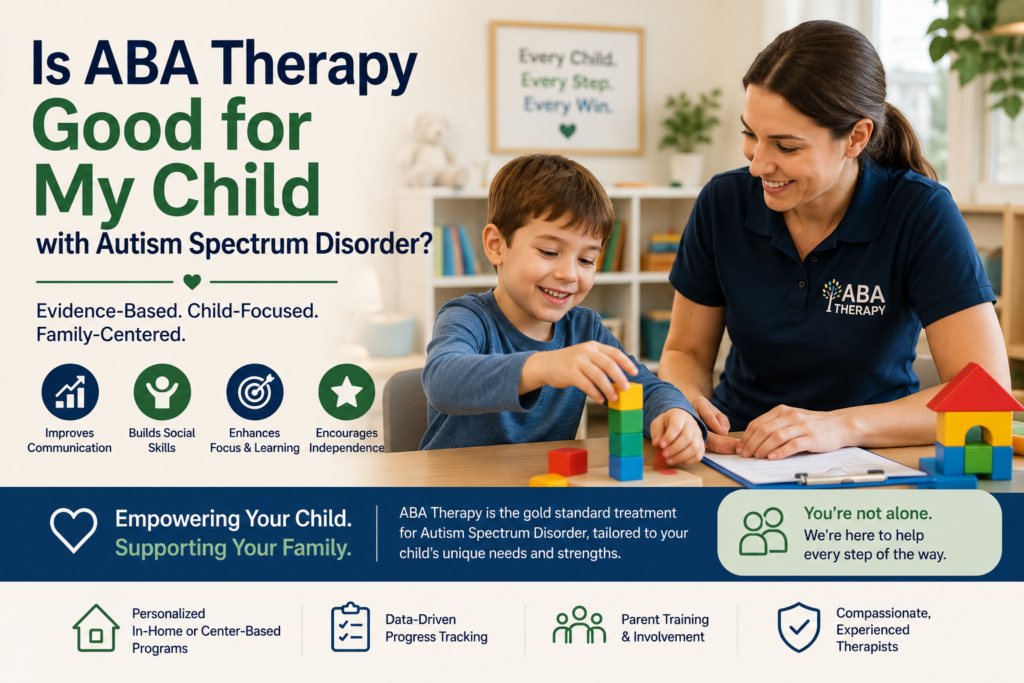
The questions parents are actually asking, answered with honesty rather than reassurance Before any parent commits to a therapy path, a series of questions runs through their mind. Some get asked at intake appointments. Most do not. They sit quietly in the background, shaping skepticism or hope without ever being examined directly.  ABA therapy Wayne County families are raising these questions more openly now, which is a good thing. The decisions made around therapy for autistic children deserve scrutiny, and they deserve answers that do not oversimplify. Behavioral Therapy for Autism: What Does It Actually Mean? The phrase behavioral therapy for autism carries a lot of weight, not all of it accurate. For many parents, “behavioral” sounds like code for controlling a child’s behavior, for demanding compliance, for telling a child how to be. That reading is not without historical basis, but it does not describe what skilled behavioral therapy looks like in current practice. The Science Beneath the Label Behavioral therapy is grounded in the study of how behavior functions, meaning how it is triggered, what it produces, and how it changes over time. Applied to autism, this means examining not whether a behavior is acceptable by social standards, but what the behavior is doing for the child. What need is it meeting? What communication is it attempting? A child who runs from a noisy room is not being defiant. A child who lines up objects repeatedly is not being obstinate.  Behavioral therapy for autism looks at these patterns and asks what they reveal about the child’s sensory experience, communication needs, and emotional regulation. That inquiry is the foundation of the work. Breaking Misconceptions Before They Take Root There is a persistent misconception that behavioral therapy means training a child to perform neurotypicality. That is not what evidence-based ABA looks like. The legitimate version of the work focuses on building skills that serve the child’s independence and communication, not on teaching a child to mask their experience for the comfort of others. Pediatric ABA Therapy: Is My Child Too Young or Too Old? Age is one of the most common concerns parents raise. There is a widespread belief that ABA must begin before age three to matter, or conversely, that older children cannot benefit. Neither claim is accurate, though both contain partial truths that got stretched. Early Intervention Is Real, but Not a Deadline The research on early intervention in pediatric ABA therapy is substantial. The brain is more plastic in early childhood, and skills established during those years build the scaffolding for later development. Beginning therapy at age two or three, when it is warranted and accessible, does tend to produce significant outcomes. But this does not mean that a six-year-old or a twelve-year-old has missed their window. Children at every developmental stage continue to learn. The approach changes with age. The goals shift.  A teenager working on ABA-based skills is working toward different targets than a toddler, but the underlying behavioral science remains relevant across the lifespan. What Age Does Shape in Practice Age matters less as an absolute cutoff and more as a context for how therapy is structured. Younger children typically receive more direct intervention, more play-based approaches, and more intensive parent coaching. Older children and adolescents are more often involved in setting their own goals and understanding the rationale behind the strategies being used. Why Do People Disagree About ABA? This question deserves an honest answer rather than a defensive one. ABA has a history that includes practices that were genuinely harmful. Some early iterations of the approach used aversive consequences, prioritized normalization over well-being, and ignored the child’s internal experience entirely. Those practices have been largely abandoned by professional organizations and are condemned by modern practitioners. The disagreement that continues today is not simply about whether ABA was ever misused. It is about whether the current model has moved far enough from its origins, whether the outcomes being measured are the right ones, and whether the autistic community’s own voice is being adequately centered in decisions about therapy approaches. These are legitimate debates. Engaging with them honestly rather than dismissing them is part of what makes an informed therapy decision possible. What Does Success Actually Look Like? Redefining this question might be the most important thing a parent can do before beginning ABA therapy. If success means “my child will appear neurotypical,” the definition needs to be revised. If success means “my child will never struggle,” the definition is setting everyone up for disappointment. Success in ABA therapy tends to look like a child who has more ways to communicate what they need. A child who can tolerate a transition they previously could not. A child who can participate in a family meal with less distress. A child whose caretakers understand them better. These are real, meaningful, life-changing outcomes. There is no universal answer to whether ABA therapy is right for your child. That answer depends on your child, your family, the quality of the provider, and the goals you are working toward. The team at The Behavior Architects invites parents to ask every difficult question before making that decision.

Blog

ABA Therapy Macomb County: A Parent’s First Steps After Diagnosis

The path from overwhelm to clarity, one informed step at a time Most parents don’t know what to do next after an autism diagnosis. You’re told to explore therapy, but no one explains where to start, what actually happens, or how to choose the right approach.  If you’re in Macomb County, you’ve likely come across ABA therapy as a recommended option. But if you’re not sure how it actually supports your child, it can feel like just another term in an already overwhelming list.  Step Zero: The Overwhelm Has a Name Before any conversation about therapy approaches, it helps to acknowledge what is actually happening in those first weeks after diagnosis. Parents are not simply gathering information.  They are processing grief alongside hope, managing their own fear while trying to appear calm for their child, and making high-stakes decisions with incomplete information. Conflicting Advice Is Part of the Landscape You will hear that ABA is the gold standard. You will also hear that ABA is harmful. You will hear that early intervention is critical. You will also hear that it is never too late. Some of this conflicting information reflects genuine disagreement within the field. Some of it reflects outdated practices being applied to current ones. Most parents, without a background in behavioral science, have no framework for sorting it out. That is not a failing. It is a reasonable response to an overwhelming amount of contested, emotionally loaded information arriving at the worst possible time. Starting with an honest ABA assessment is one way to move from noise to signal. ABA Assessment: The First Real Conversation An ABA assessment is often described in clinical terms: standardized measures, functional behavior assessments, and interview protocols. But from a parent’s perspective, what a good assessment actually is is a conversation. A skilled behavior analyst is not just collecting data. They are learning about your child. What Parents Feel During Assessment Most parents describe the assessment period with a mix of relief and anxiety. Relief because someone is finally paying close attention to their child. Anxiety because they are worried about what will be found, how it will be described, and whether the description will reduce their child to a list of deficits. A well-conducted ABA assessment focuses on strengths alongside challenges. It asks what motivates the child, what environments bring out their best engagement, and what communication tools already exist. It asks parents what they have already tried and what they have noticed. The parent is a collaborator in this process, not a bystander. Understanding Your Child Differently One of the most consistent things parents report after a thorough assessment is that they see their child differently. Not in a diminishing way, but in a more specific and useful way. Behaviors that seemed random start to make sense in context. Patterns emerge that suggest not a problem to be fixed but a communication to be understood. A child who screams every time the family tries to leave the house is not being difficult. They may have no reliable way to know that leaving is temporary, or what comes next, or that the preferred thing they are leaving behind will still be there. The assessment reveals the structure of the difficulty. That structure is where the work begins. ABA Treatment Plan: A Roadmap, Not a Rulebook After assessment, the ABA treatment plan is developed. This document is often the source of anxiety for parents who expect it to be a rigid prescription. In practice, a good treatment plan is more like a living roadmap than a fixed document. Flexibility Built Into the Structure A well-written ABA treatment plan identifies target skills, outlines how those skills will be taught, and establishes how progress will be measured. But it also builds in review points where the plan is revised based on what is actually happening. If a skill is being mastered faster than anticipated, the plan adjusts. If a target turns out to be less meaningful to the family than it seemed, it changes. This flexibility is important because children are not static. A plan written in October should look different by March, not because the original plan was wrong, but because the child has grown. Rigid plans that do not evolve are one of the most common sources of frustration in long-term ABA therapy. The Waiting and Watching Phase Between the plan being written and meaningful progress becoming visible, there is a period that parents often find the most difficult. The therapy is happening. The data is being collected. But the change feels invisible. Progress in early ABA therapy often shows up in small ways before it shows up in large ones. A child who used to melt down for forty minutes might now recover in twenty. A child who never made eye contact during requests might now do it occasionally. These shifts are real, even when they do not feel like enough. Starting is always messy. Clarity builds over time. If you are in Macomb County and wondering whether it is time to take the first step, The Behavior Architects offers consultations designed to meet parents exactly where they are.

Blog

Oakland County ABA Therapy for Autism Spectrum: Accepting Your Child While Supporting Their Growth

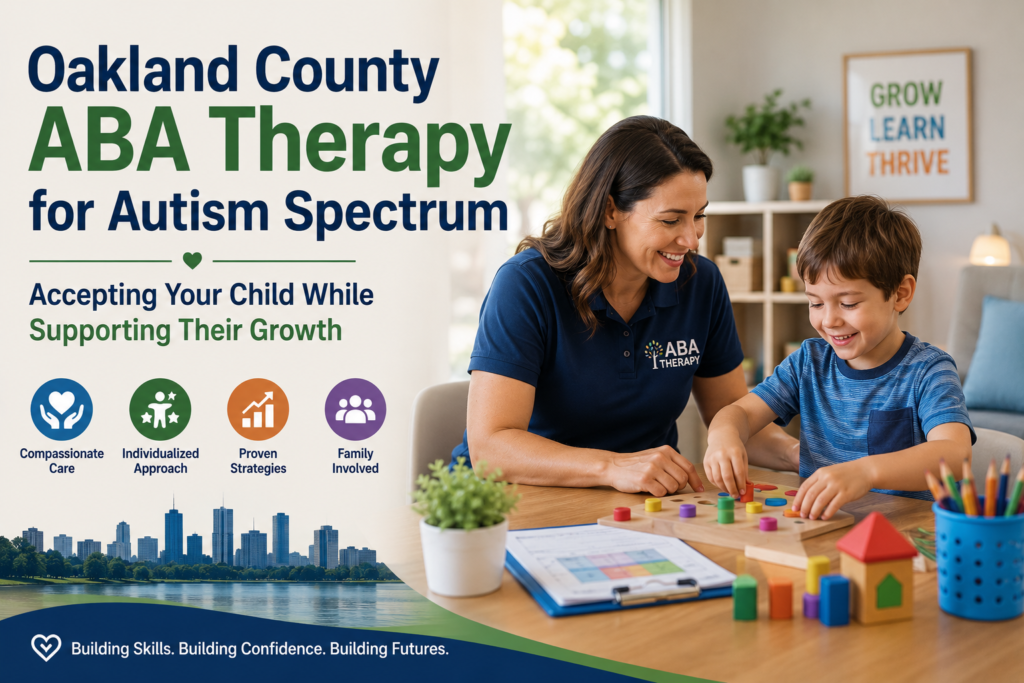
A thoughtful look at the question every parent asks but rarely says out loud There is a question that sits behind many of the conversations parents have when their child receives an autism diagnosis. It rarely gets asked directly, but it shapes every decision that follows.  The question sounds something like this: “If I pursue therapy, am I saying there is something wrong with my child?“ That internal tension is real, and it deserves a real response. ABA therapy in Oakland County is most effective when it begins with that question on the table, not buried beneath paperwork and intake forms. Autism Acceptance Is Not the Absence of Support Acceptance has sometimes been positioned as the opposite of intervention. As if embracing a child fully means refusing to help them build new skills. That framing creates a false choice that does not serve anyone, least of all the child. The Fear Beneath the Decision Parents who hesitate about ABA therapy often carry a specific fear. Not that therapy will fail, but that it will succeed in the wrong direction. That their child’s particular way of thinking, their sensory engagement with the world, their humor, their patterns, will be flattened into something more palatable to others but less authentically themselves. That fear is not irrational. It comes from real history, and it should be named rather than dismissed.  The autism community has raised legitimate criticisms of approaches that prioritized appearance of neurotypicality over a child’s well-being. Those criticisms have shaped how modern ABA is practiced, and they should continue to shape it. What Acceptance Actually Requires Authentic autism acceptance is not passive. It does not mean watching a child struggle with communication and calling that struggle identity. It does not mean allowing frustration to go unaddressed because addressing it feels like interference. Acceptance, at its core, means seeing a child fully and then working to expand what is available to them. A child who is nonverbal at age four is not less of themselves if they learn to communicate at age six. A child who melts down at transitions is not more authentically autistic if no one helps them build a bridge between moments. Acceptance and support are not rivals.  They are partners when the support is built on a genuine understanding of the child. Skill-Based ABA: Building Toward Dignity and Autonomy What parents actually want for their children tends to be consistent, even across very different families. They want their child to be able to communicate what they need. They want their child to navigate daily life with less frustration. They want their child to have relationships, even if those relationships look different from what the parent expected. Skill-based ABA is oriented toward exactly these goals. Skills Over Compliance The most important shift in contemporary ABA practice is the movement away from compliance-focused approaches toward skill-building approaches. Compliance-focused ABA asked: how do we get this child to stop doing that?  Skill-based ABA asks: what does this child need to learn in order to have more of what they want? That question changes everything. A child who hits when a preferred activity ends does not need to be taught to tolerate hitting. They need to learn to communicate protest, to tolerate transitions, and to trust that preferred activities will return. Building those skills does not change who the child is. It changes what the child can do. Examples Rooted in Real Life Consider a child who loves trains and becomes dysregulated when the train set is put away. A skill-based approach does not focus on suppressing the reaction. It builds toward teaching the child to request “more time” or “not yet.” It builds a visual schedule so the child can anticipate the transition. It teaches the parent to give a two-minute warning in a way the child can process. The child still loves trains. That does not change. What changes is that the child now has language and structure around that love, which means more time with trains, not less, because the meltdowns no longer end the session. The Moment Things Shift There is often a moment, somewhere in the middle of a good therapy process, when parents realize that helping their child build skills did not change who their child is. It gave the child more ways to be themselves in the world. A child who learns to ask for a break is still the same child who needed the break. A child who learns to say “no” using a picture card is still the same child who felt overwhelmed. The skill does not replace the experience. It gives the experience a voice. If you are sitting with the question of whether pursuing support for your child means accepting something less about them, that question is worth exploring carefully. The team at The Behavior Architects approaches these conversations with the seriousness they deserve.

Blog

In-Home ABA Therapy Detroit: Where Real Learning Begins

A parent’s guide to understanding ABA in the environment that matters most Every parent of a child with autism has experienced a major mood shift within a day. The child who held it together all morning at the clinic falls apart within minutes of walking through the front door. Or the reverse happens.  Your child seems calm, focused, and connected at home, but the moment they step into a structured setting, everything shifts. These contradictions are not random. They are meaningful, and they deserve a meaningful response. In-Home ABA Therapy Detroit is all about catering those contradictions by bringing skilled therapeutic support into the space where your child already lives. ABA Autism Therapy: What It Actually Looks Like in Practice Most descriptions of ABA autism therapy start with definitions. That is the wrong place to begin. Definitions do not tell you what it feels like to watch your child struggle to ask for a snack, or what it means when a therapist sits on the kitchen floor and follows your child’s lead for twenty minutes. Applied behavior analysis works by examining the relationship between a behavior and what surrounds it. That means looking at what happened before the behavior, the behavior itself, and what followed. These are called antecedents, behaviors, and consequences in behavioral science. But in practice, it means a therapist observing your child throw a toy during a transition and asking not “what is wrong with this child” but “what is this child trying to communicate?” Replacing the Myth with the Mechanism A child who throws toys when frustrated is not misbehaving in any simple sense. They may lack the language or the signal to say “I am overwhelmed” or “I do not want to stop.” The behavior becomes their loudest available option. ABA autism therapy works to expand the range of options, not to eliminate the child’s instinct to communicate. This is where the misconception about ABA most commonly appears. Many parents arrive with the fear that ABA is about compliance, about making a child sit still and repeat tasks.  Modern, ethical ABA therapy is about understanding the function of behavior and building alternatives that serve the same need more effectively. Week 1 vs. Week 12: A Real Look at Progress In the first week of in-home therapy, much of what the therapist does is observe. They watch how your child moves through the morning routine. They note what triggers a shutdown, what sparks engagement, and where the biggest communication gaps sit. By week twelve, something often shifts. Not dramatically, not in ways that look like a movie montage.  A child who used to drop to the floor when asked to stop watching a video might now accept a five-minute warning with a visual timer. A child who hits during transitions might now reach for a parent’s hand instead.  These are small pivots with large implications. Naturalistic ABA: Learning Woven into Daily Life There is an older version of ABA that most critics are referring to when they raise concerns. That version involved long hours at a table, repetitive drills, and very little connection to how a child actually lived their life. That model has been substantially reformed. Naturalistic ABA is now the approach that most skilled therapists use, and it looks remarkably different. Old Structure Versus Real Life Naturalistic ABA does not wait for a session to begin. Learning happens during snack time when a child gestures toward the crackers and the therapist creates a moment to model the word. It happens during sibling play when the therapist coaches turn-taking without stopping the game. It happens in the hallway when a child is putting on shoes, and a therapist uses that two-minute window to practice the sequence. The distinction matters because generalization, the ability to use a skill across different settings, is one of the hardest things for many autistic children to achieve. When skills are only practiced at a table with flashcards, they often stay at the table. When they are practiced during the actual morning routine, in the actual kitchen, with the actual sensory experience of home, they tend to stick. Parent Training Is Not Optional One of the most underemphasized parts of quality ABA therapy is parent training. The therapist is in your home for a certain number of hours each week. The rest of the week, you are there. That is not a gap in service. It is an opportunity, if you are equipped to use it. Parent training in naturalistic ABA means learning to see the same moments the therapist sees. It means knowing when to prompt and when to wait. It means understanding how to respond when a behavior occurs so that your response supports the plan rather than accidentally undermining it.  This is not about turning parents into therapists. It is about making the whole environment therapeutic. What Parents Should Realistically Expect This section exists because too many parents have been either frightened away from ABA or sold on it unrealistically. Neither extreme serves your child. In-home ABA therapy is a commitment. It requires consistency from your household. It requires you to participate actively rather than handing your child over to a therapist and hoping for the best. There will be sessions where progress feels invisible. There will be weeks where a skill your child mastered seems to disappear. This is normal, and it is part of the process. What skilled in-home ABA therapy offers is a systematic way of understanding your child’s behavior and building toward greater independence and communication. That is worth something specific, not everything, but something real. If you are considering this path for your family, reach out to The Behavior Architects to ask informed questions before you commit.

Scroll to Top