
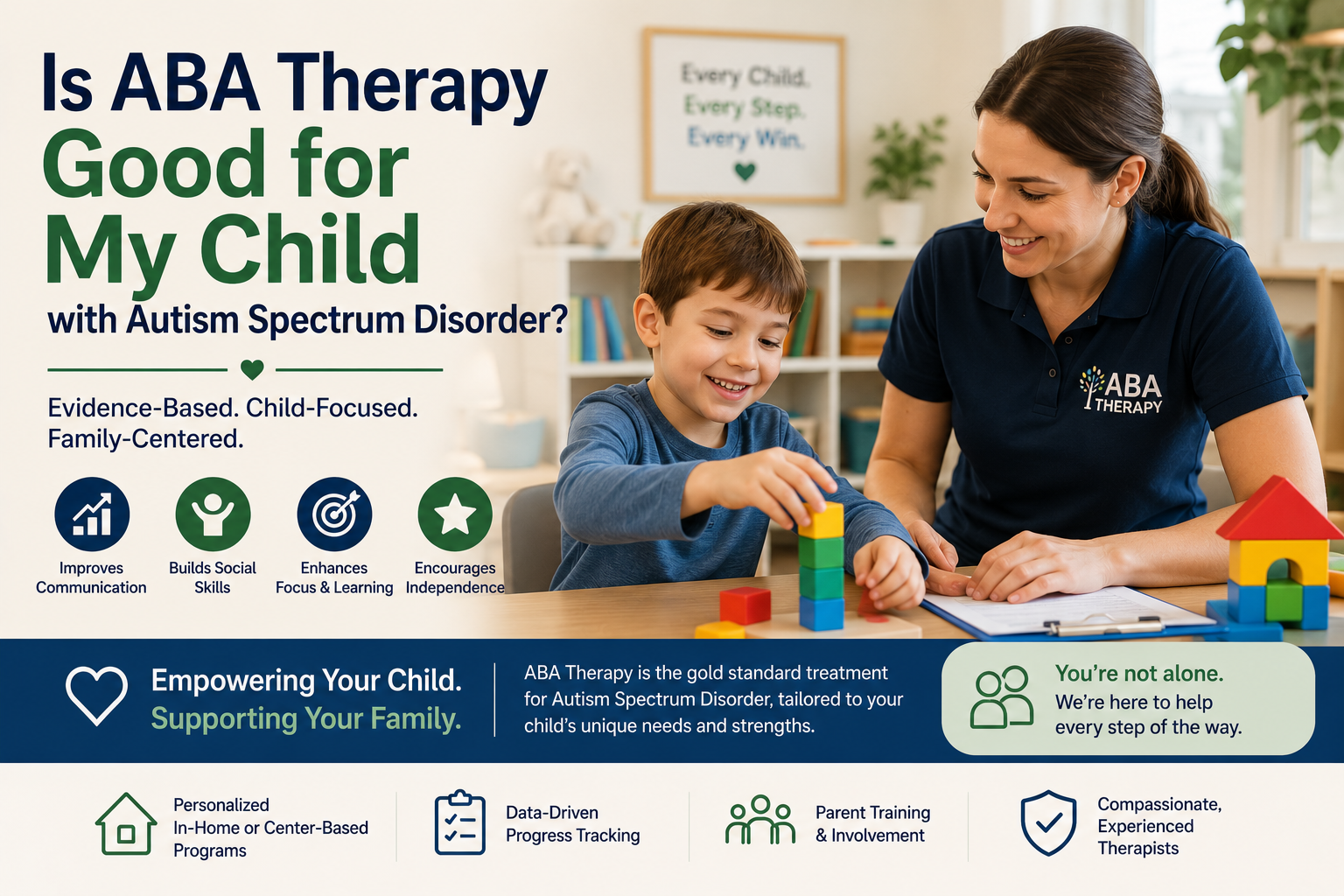
The questions parents are actually asking, answered with honesty rather than reassurance
Before any parent commits to a therapy path, a series of questions runs through their mind. Some get asked at intake appointments. Most do not. They sit quietly in the background, shaping skepticism or hope without ever being examined directly.
ABA therapy Wayne County families are raising these questions more openly now, which is a good thing. The decisions made around therapy for autistic children deserve scrutiny, and they deserve answers that do not oversimplify.
Behavioral Therapy for Autism: What Does It Actually Mean?
The phrase behavioral therapy for autism carries a lot of weight, not all of it accurate. For many parents, “behavioral” sounds like code for controlling a child’s behavior, for demanding compliance, for telling a child how to be. That reading is not without historical basis, but it does not describe what skilled behavioral therapy looks like in current practice.
The Science Beneath the Label
Behavioral therapy is grounded in the study of how behavior functions, meaning how it is triggered, what it produces, and how it changes over time. Applied to autism, this means examining not whether a behavior is acceptable by social standards, but what the behavior is doing for the child. What need is it meeting? What communication is it attempting?
A child who runs from a noisy room is not being defiant. A child who lines up objects repeatedly is not being obstinate.
Behavioral therapy for autism looks at these patterns and asks what they reveal about the child’s sensory experience, communication needs, and emotional regulation. That inquiry is the foundation of the work.
Breaking Misconceptions Before They Take Root
There is a persistent misconception that behavioral therapy means training a child to perform neurotypicality. That is not what evidence-based ABA looks like. The legitimate version of the work focuses on building skills that serve the child’s independence and communication, not on teaching a child to mask their experience for the comfort of others.
- Behavioral therapy studies function, not just form
- Triggers and consequences are examined, not just the behavior itself
- The goal is understanding behavior, not suppressing it
- Skills built in therapy are chosen based on the child’s actual needs
Pediatric ABA Therapy: Is My Child Too Young or Too Old?
Age is one of the most common concerns parents raise. There is a widespread belief that ABA must begin before age three to matter, or conversely, that older children cannot benefit. Neither claim is accurate, though both contain partial truths that got stretched.
Early Intervention Is Real, but Not a Deadline
The research on early intervention in pediatric ABA therapy is substantial. The brain is more plastic in early childhood, and skills established during those years build the scaffolding for later development. Beginning therapy at age two or three, when it is warranted and accessible, does tend to produce significant outcomes.
But this does not mean that a six-year-old or a twelve-year-old has missed their window. Children at every developmental stage continue to learn. The approach changes with age. The goals shift.
A teenager working on ABA-based skills is working toward different targets than a toddler, but the underlying behavioral science remains relevant across the lifespan.
What Age Does Shape in Practice
Age matters less as an absolute cutoff and more as a context for how therapy is structured. Younger children typically receive more direct intervention, more play-based approaches, and more intensive parent coaching. Older children and adolescents are more often involved in setting their own goals and understanding the rationale behind the strategies being used.
- Early intervention creates the most opportunity, but is not the only opportunity
- Pediatric ABA therapy adapts its approach to the child’s developmental stage
- Adolescents benefit from collaborative goal-setting, not just directed teaching
- There is no age at which support becomes irrelevant
Why Do People Disagree About ABA?
This question deserves an honest answer rather than a defensive one. ABA has a history that includes practices that were genuinely harmful. Some early iterations of the approach used aversive consequences, prioritized normalization over well-being, and ignored the child’s internal experience entirely. Those practices have been largely abandoned by professional organizations and are condemned by modern practitioners.
The disagreement that continues today is not simply about whether ABA was ever misused. It is about whether the current model has moved far enough from its origins, whether the outcomes being measured are the right ones, and whether the autistic community’s own voice is being adequately centered in decisions about therapy approaches.
These are legitimate debates. Engaging with them honestly rather than dismissing them is part of what makes an informed therapy decision possible.
What Does Success Actually Look Like?
Redefining this question might be the most important thing a parent can do before beginning ABA therapy. If success means “my child will appear neurotypical,” the definition needs to be revised. If success means “my child will never struggle,” the definition is setting everyone up for disappointment.
Success in ABA therapy tends to look like a child who has more ways to communicate what they need. A child who can tolerate a transition they previously could not. A child who can participate in a family meal with less distress. A child whose caretakers understand them better. These are real, meaningful, life-changing outcomes.
There is no universal answer to whether ABA therapy is right for your child. That answer depends on your child, your family, the quality of the provider, and the goals you are working toward. The team at The Behavior Architects invites parents to ask every difficult question before making that decision.


